
The Vanishing Points of Family Lore
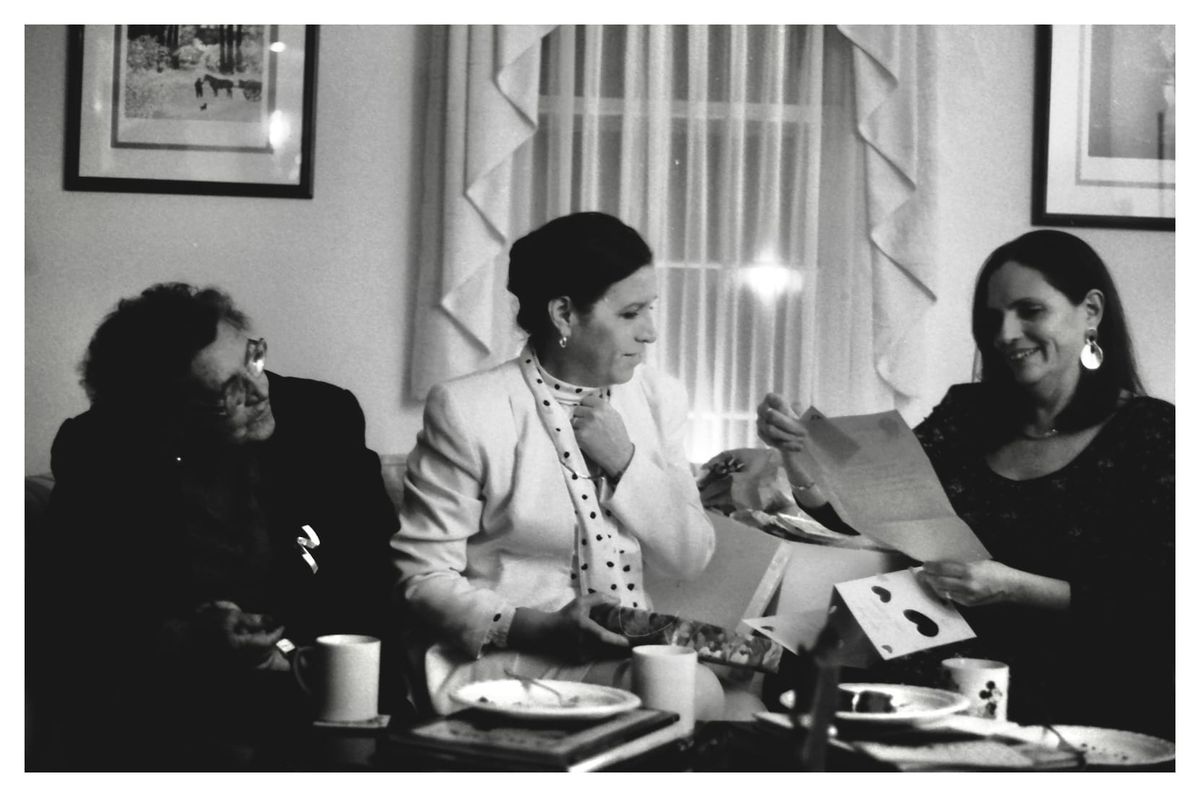
The way the family story goes, my tía abuela was ill and close to death when she turned to her older sister (my abuela) and told her, “I’ll never forgive you for dragging me to this godforsaken country.”
My tía abuela’s name and the godforsaken country she blamed her sister for dragging her to were one in the same – America.
She was America de Mora. My grandmother (known as Abi to us) was Emma de Mora. And they both arrived in New York City from Quito, Ecuador on September 14th, 1929 along with their father, Regulo de Mora.
Family lore can be a blurry thing. Somehow still in motion years later, somehow still evolving, somehow still turning and distorting. Facts are memories, memories are facts, and both look different from whichever vanishing point you’re squinting at them from.
I interviewed Abi in the mid 1990s when she was staying at my tía Lola’s house in Chicago. We were all there for some holiday, either Thanksgiving or Christmas, and I wanted to get some of her stories down onto videotape. I was working at Maysles Films at the time, and you couldn’t NOT want to make a documentary when you were around that place day in and day out.
I started many documentaries in those years. I finished none.
But here’s the rub. I can’t find the videotape of the interview. Not anywhere. Whenever some old cardboard box turns up from that era, I dig through it searching for Hi-8 tapes, wishing and hoping for a cassette that says “Abi,” but no luck. I’ve found tapes, I’ve found lost memories, I’ve found lots of old tax documents, but never that tape. Never those memories.
I did take notes when I initially watched it, and up until about 15 years ago, I still had them. Not anymore. Digitally lost to a corrupt file, poor labeling or just a no longer existing software program. Whichever it was, all I have now is what I remember.
And some of that’s gotta be the facts, right?
Abi had a very upper-class existence in her youth in Quito, Ecuador. She called it very European when describing it to me. The connection to Spain was still strong in upper Ecuadorian classes, even when the pride felt from being independent from that colonizing nation was stronger. They still took many pinky-in-the-air societal cues from their royalty loving primos in Europe. Abi sat for oil portraits every year. She had servants. She had no idea how to cook, how to clean, how to be independent.
And then she fell in love with an indigenous Ecuadorian. A young Incan man – the two of them could only have been around 17 or 18 at the time.
When I asked her to tell me about him – what she remembered about him, what she loved about him – she began to cry. It took her awhile to calm down, to come back, to be present with me in that moment, and when she finally did, she coolly told me that she wouldn’t tell me anything. That his memory was just for her, no one else. But she did share with me that she loved him dearly and that she thought of him often, even in her old age.
Her father didn’t approve of the relationship and demanded she end it. I mean, being proudly Ecuadorian was one thing, but being an upper-class Ecuadorian in love with an indigenous Incan was simply TOO much independence, too much push back against the crusty societal norms.
Abi refused.
I’m not sure what specifics happened next, but Abi’s father decided that simply breaking them up wasn’t enough – Regulo needed to break the connection entirely, to take Abi out of his orbit and put her into another, ideally a much stronger one. So, he offered to take his daughter someplace he knew she was hungrily curious about – New York City.
He told his daughters he would finance one year of them living in New York. He’d arrange to have them enrolled in secretarial college, get them a place in an all-woman’s apartment building, and fill a bank account to pay for it all. He’d provide the money, but they would have to budget and make any necessary payments – not a revolutionary step toward independence, but for a pair of young women whose clothes were generally laid out for them in the morning by a servant, it was a big one.
And so, they arrived in New York City on September 14, 1929.
Regulo stayed for a few weeks until his girls understood how the city worked, how to get around, where to go, where to avoid.
And slowly, Abi fell in love with her new home.
But it never really took for her sister America.
A month later, something happened that America hoped would require them to return home, to return them to their upper-class life surrounded by faces she recognized and a language she understood.
On Tuesday, October 29th, 1929 the stock market crashed.
And when it crashed, almost all the money their father had put into their bank account for their year in the city crashed with it.
America wanted to tell their father right away. Either get him to wire them money or get him to come to NYC, collect them and bring them home to Ecuador.
But Abi wouldn’t have it, and being the older of the two, her decisions were their decisions. Abi had fallen hard and fast for New York City, and she wasn’t about to give up on it so quickly. She dropped out of secretarial school and got a job, eventually starting what would become many decades of employment as the “notions lady” selling buttons in the basement of Bloomingdale’s in Manhattan.
But this was 1929 and a woman acting independently didn’t guarantee her actual independence. She knew the only way truly to get beyond her father's reach and keep him from pulling her away from New York City was to start looking for a New York husband. The other women that lived in her apartment building took pity on her and started teaching Abi how to clean, how to do her own laundry and most importantly, how to cook. None of them thought she had a chance in hell of finding a man if she couldn’t cook.
The women were almost all immigrants, mostly Italian and Irish, and they taught her what they knew – various pastas and sauces, pea soup, corned beef and cabbage and more. To this day, some of those recipes are still in the family rotation for meals.
And while Abi was enjoying stoking the fire of her newly discovered independence, she couldn’t ignore that she also missed home. She missed other Ecuadorians; she missed that cultural understanding that comes from people who lived where you lived, people who were raised where you were raised.
Somehow, Abi found a social club of ex-pat Ecuadorians in NYC and she started going to their events. And that’s where she met Rafael Miranda, her future husband and our abuelo (Abo we called him).
But it wasn’t the first time she met him.
She actually first met Rafael in Ecuador years before. She didn’t remember it at first – I’m not sure exactly WHEN she realized who he was, but I believe it was some time after they were married. Abi grew up in Quito, the capital city of Ecuador, high up in the cool of the Andes. Rafael was from Guayquil, a coastal, almost tropical lowland city in the south of the country. Times have changed, but back then people from the highlands and people from the coast simply did NOT mix, except possibly to hurl insults at one another.
So, how did they cross paths?
A year or two before Abi traveled to New York City, she was crowned Miss Quito and represented her city at the Miss Ecuador pageant, ultimately coming in second and losing by only a few points to Miss Guayaquil. And at the time, Miss Guayaquil was being “managed” by a double-breasted suit wearing, hair slicked back under his fedora hat Guayaquileno named Rafael Miranda.
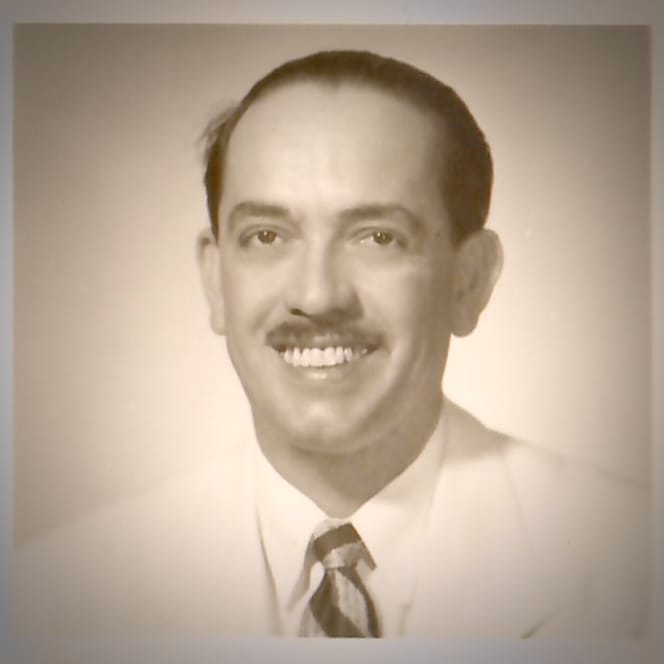
From family lore, he hit on Abi pretty hard at the Miss Ecuador pageant, in a style that I think can safely be described as creepy, even looking back at it all these years later.
Everyone in my family knows this story, everyone knows the twist of how Abo and Abi met years before they were married. And while the first Miss Ecuador pageant didn’t actually happen until 1930, we hold the reins of the story loosely, giving it some slack to run. There had to have been some sort of a pageant before the one that started in 1930, right? Maybe not the “official” Miss Ecuador pageant, but some sort of a Miss Ecuador pageant?
Right or wrong. It is what it is.
We let the story live, because it’s alive. It’s not ours anymore, but it is ours. And our kids. And kids of kids we’ll never meet.
As much as I can remember, Abi and America were not that close in their adult life. Our family would occasionally visit theirs. I have memories of these visits being stiff and cordial, as my brother, sister and I had awkward conversations with America’s grandkids, while we all (including them) wished for it all to be over.
I really don’t know what America’s life in the United States was like, but I can assume it was harder than Abi's. I know the beginning of America's life, and I know the end of it, but not the middle. Not the part where she carved her own path free of her older sister.
It’s kind of cruel that as we get older our heads fill with more and more questions about our past, about where we came from, about who came before who came before, and who came before that. By the time we know enough as adults to ask the questions to get the answers we want to know, the folks that can actually answer them are already gone.
A narrative vanishing point that keeps resetting for whoever comes next.
Maybe it keeps the facts blurry, but it also keeps the lore alive; true or false, right or wrong.
If you enjoyed this piece and want to support the work, please do so HERE.
Copyright @ 2026 by Alex R. Johnson
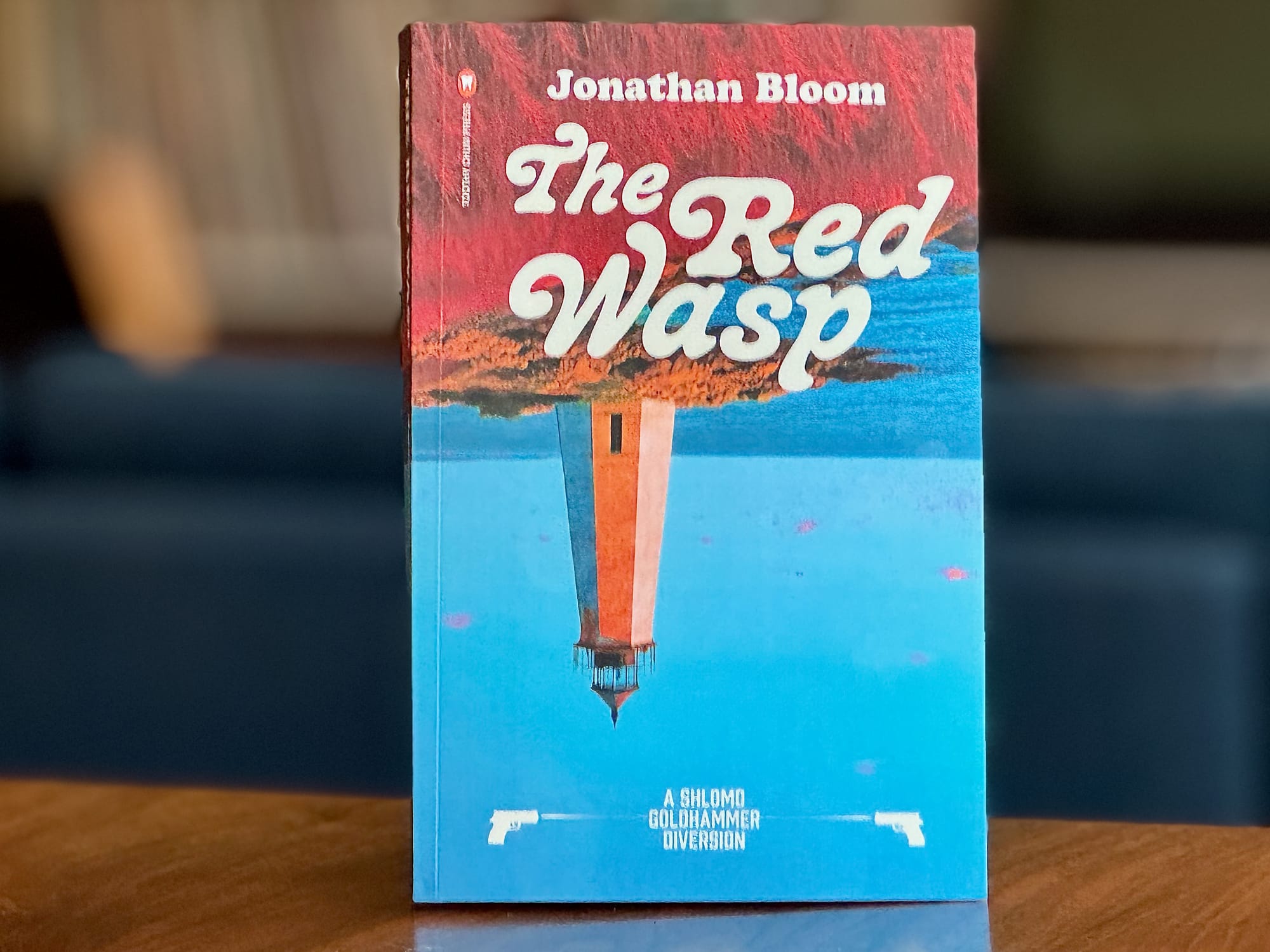
Hey! Did you know that Jonathan Bloom’s fantastic new novel THE RED WASP is out now? Bloom is amazing at balancing the humorous with the dark, and this 1981 set detective noir slices that line perfectly. Part John Cheever, part Raymond Chandler, part Phillip Roth, it’s a perfect summer read. Pick it up HERE before summer is gone!
And as always, you can pick up my novel BROOKLYN MOTTO in print, ebook or audiobook HERE.
TWO STEP remains available to buy or rent on almost all platforms.